How Can Companies Strengthen Workforce Continuity When Employees Leave?
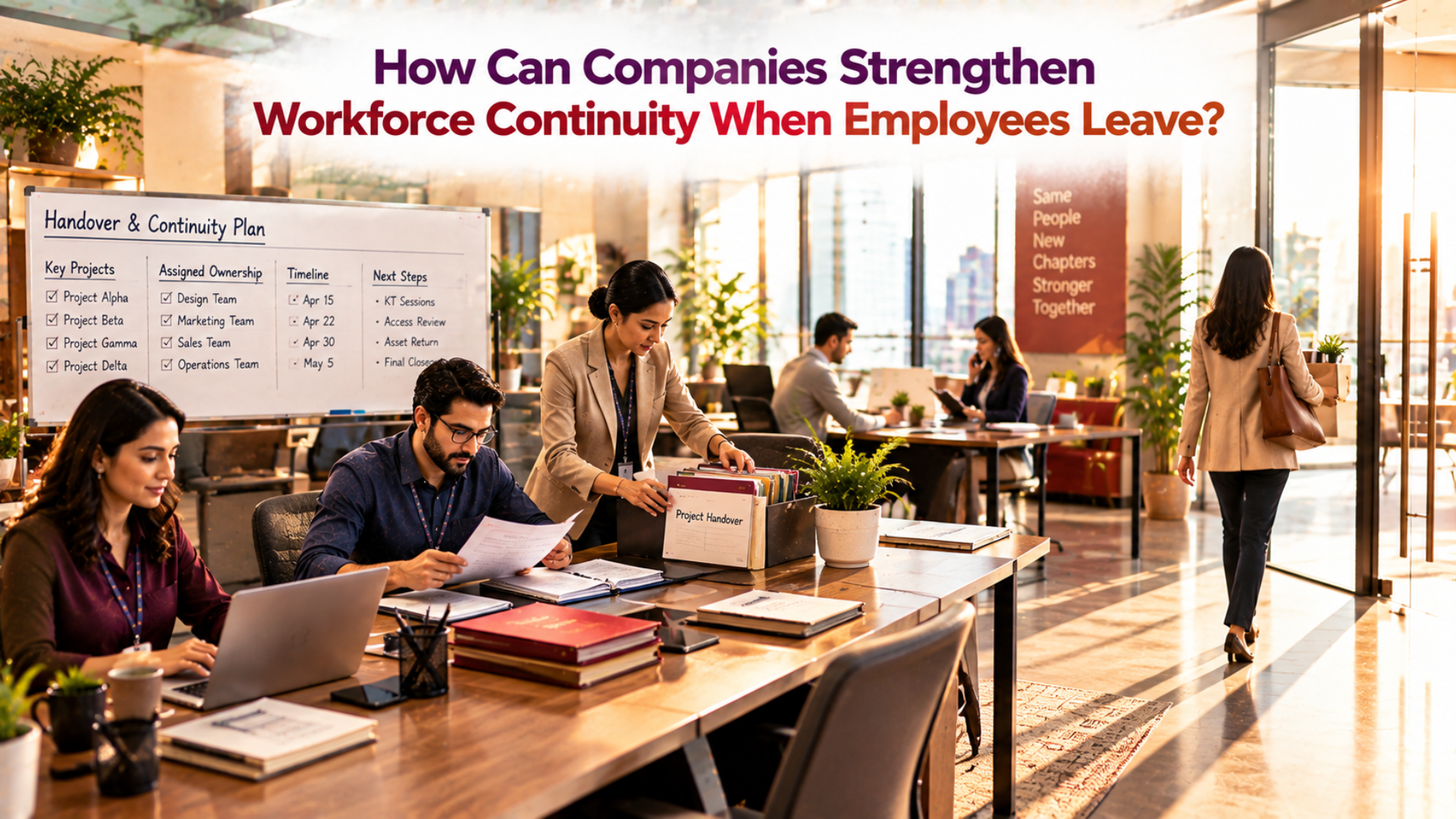
What happens when a key employee announces their departure? Can the business maintain productivity, protect information, and keep projects moving without unnecessary disruption? Employee Offboarding provides a structured framework for handling an employee's departure while coordinating people, responsibilities, company resources, and important information.
A well-designed process should do more than complete administrative tasks. It should help managers understand what work needs to continue, identify knowledge that could otherwise be lost, coordinate system access, recover company property, and communicate expectations clearly. When these activities are planned in advance, businesses can make employee transitions more predictable and easier to manage.
Why Is a Structured Departure Process Important?
An employee's departure can affect projects, customers, colleagues, and operational workflows. The impact of ***[Employee Offboarding](https://empcloud.com/blog/employee-offboarding-and-exit-management-2026-remote-picks/
)*** becomes greater when the departing employee manages specialized responsibilities or has knowledge that is difficult to replace quickly.
A structured approach can help organizations:
* Maintain continuity across active projects
* Transfer important responsibilities to suitable employees
* Protect confidential business information
* Recover company-owned equipment
* Complete payroll and administrative requirements
* Document essential processes
* Gather useful departure feedback
The process should be consistent enough to prevent missed tasks while remaining flexible enough to accommodate different employee roles and working arrangements.
What Should Managers Review When an Employee Leaves?
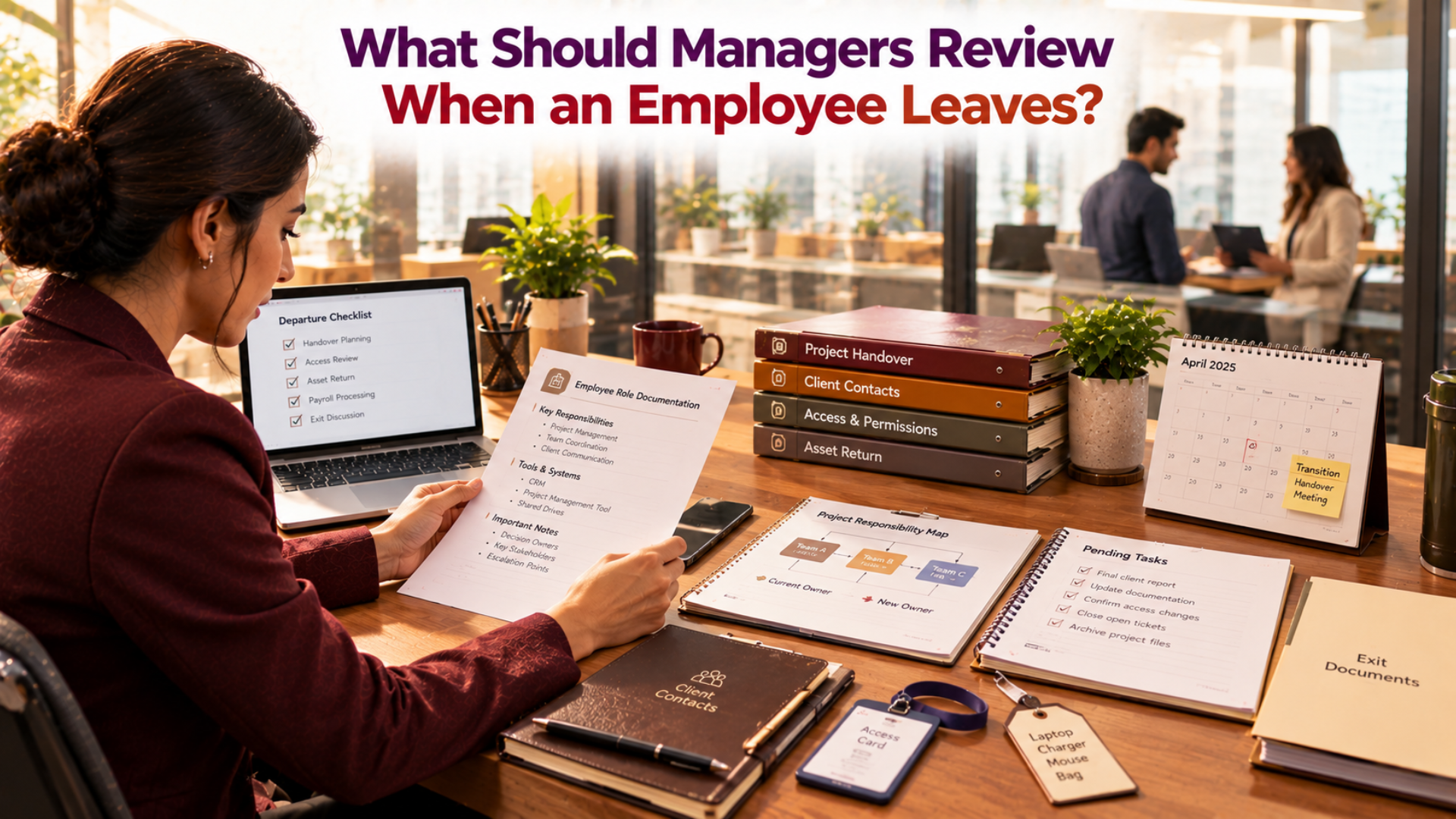
The manager should begin by identifying everything connected to the employee's current responsibilities. A simple role-transition review can reveal tasks that may otherwise be overlooked.
Review Active Responsibilities
Create a list of current projects, recurring duties, customer relationships, deadlines, meetings, approvals, and specialized responsibilities.
Identify Replacement Ownership
Each important responsibility should have a clear next owner. Where a permanent replacement is not available, managers can assign temporary ownership to maintain continuity.
Document Critical Information
The departing employee can provide instructions, project context, contact information, process documentation, and details about unresolved issues.
Establish a Transition Schedule
Not every task needs to be completed on the same day. A timeline allows the team to prioritize urgent work while giving sufficient time for knowledge transfer.
How Can HR Data Support Better Workforce Decisions?
Employee departures can also provide useful information about broader workforce patterns. Organizations that consistently record relevant departure information may identify recurring issues involving specific processes, teams, roles, or employee experiences.
This is where ***[HR analytics](https://empcloud.com/blog/hr-analytics-performance/
)*** can become useful. Instead of examining each departure independently, HR teams can review aggregated information such as turnover patterns, exit-feedback themes, tenure trends, role changes, and reasons employees provide for leaving.
Used responsibly, this information can help organizations ask better questions:
* Are certain roles experiencing unusually frequent turnover?
* Are employees leaving at similar points in their careers?
* Do recurring feedback themes suggest process improvements?
* Are knowledge-intensive roles creating transition risks?
* Could management or development practices be improved?
The purpose is not to reduce employees to statistics. Data should complement conversations and help HR teams investigate patterns that deserve attention.
How Can Businesses Protect Information During a Departure?
Access management is an important part of the transition. Employees may have access to email, shared drives, customer systems, project platforms, financial tools, internal databases, and other applications.
HR and IT should coordinate the timing of access changes according to company policies and the employee's circumstances. At the same time, legitimate business information should be transferred to authorized locations so that essential files remain available.
A practical security review can include:
1. Listing systems associated with the employee's role.
2. Identifying important files requiring ownership transfer.
3. Confirming company devices and access cards.
4. Reviewing shared accounts and permissions.
5. Documenting completed access changes.
6. Ensuring relevant records remain accessible to authorized employees.
This approach helps balance information security with business continuity.
How Can Knowledge Transfer Reduce Operational Disruption?

One of the biggest risks during an employee departure is losing practical knowledge that exists mainly in the employee's experience.
A good handover should focus on information another employee can actually use. Instead of asking for a broad collection of files, managers can structure the discussion around specific responsibilities.
Useful handover content may include:
* Current project status
* Upcoming deadlines
* Key stakeholders
* Recurring procedures
* Customer preferences
* Common problems and solutions
* Important documents and file locations
* Outstanding decisions
Managers should also allow the receiving employee to ask questions. A short interactive session can uncover context that would be difficult to capture in a written checklist.
How Can Operational Planning Prepare Teams for Employee Departures?
Businesses should not wait until an employee's final day to consider how their responsibilities will continue. ***[Operational planning](https://medium.com/@cloudvision14/how-does-operational-planning-help-businesses-build-long-term-success-14de25f7d209
)*** can incorporate workforce transitions into broader business continuity activities.
For example, managers can identify roles where the loss of one employee would create significant disruption and prepare documentation or backup ownership in advance.
This can involve:
* Cross-training team members
* Maintaining updated process documentation
* Establishing backup owners for critical responsibilities
* Reviewing workload distribution
* Keeping important contacts accessible
* Regularly updating role-specific procedures
This preparation is particularly useful for small teams where one person may handle several specialized functions.
How Can Technology Simplify the Process?
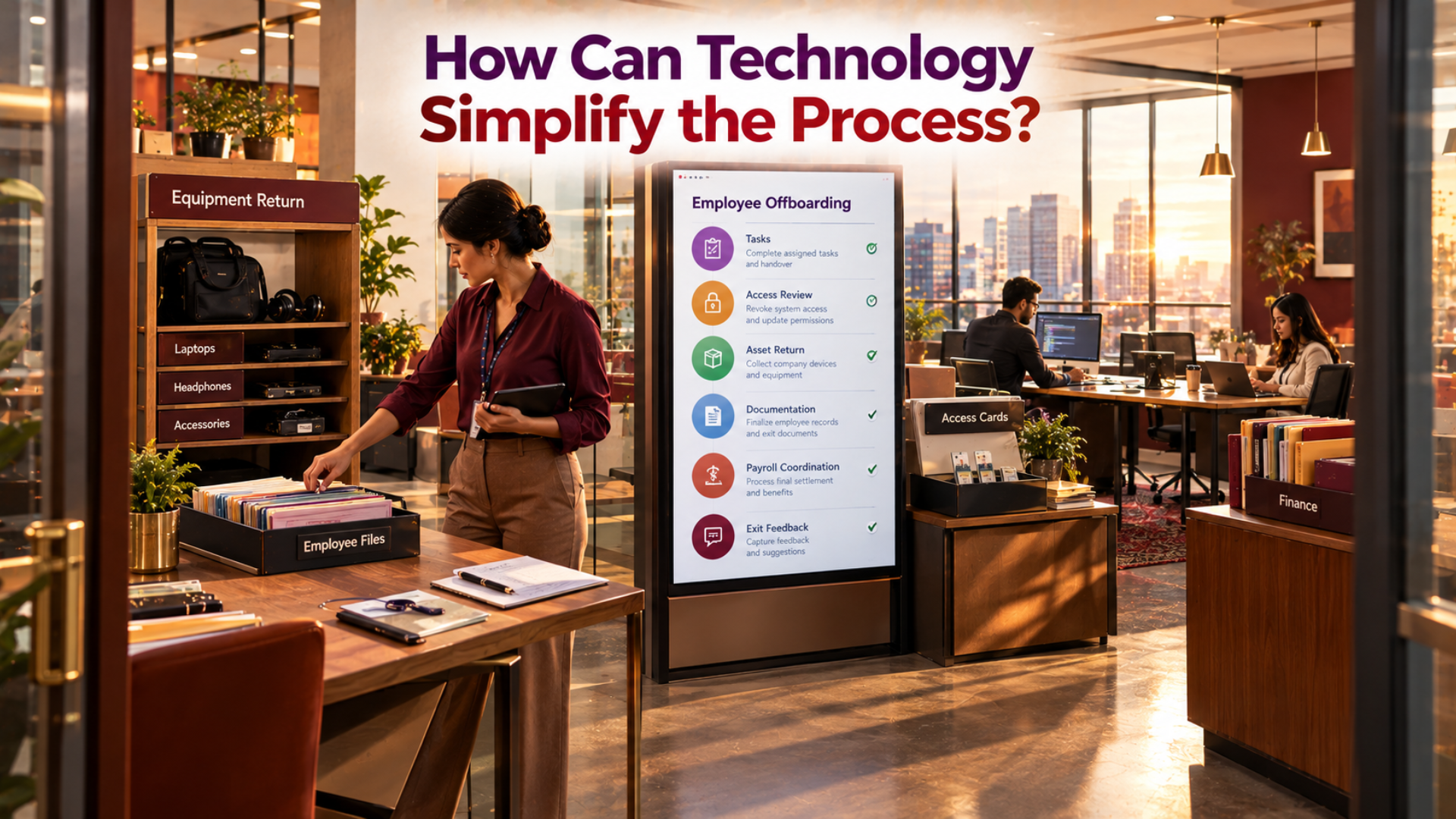
Technology can connect HR, managers, IT, and finance through a centralized workflow. Instead of relying on scattered emails, teams can assign tasks, monitor deadlines, record completion, and maintain appropriate documentation.
Useful capabilities may include:
* Automated task reminders
* Digital approval workflows
* Asset-return tracking
* Employee record management
* Access-review notifications
* Exit survey distribution
* Documentation storage
However, technology should support not replace human communication. Managers still need to explain the transition, acknowledge the employee's contribution, and handle sensitive situations thoughtfully.
What Should Businesses Do After the Employee's Final Day?
The process should not necessarily end when the employee leaves. HR and managers can review whether all required tasks were completed and whether the team has successfully assumed the departing employee's responsibilities.
A post-departure review might examine:
* Whether critical knowledge was transferred
* Whether company assets were recovered
* Whether system access was handled correctly
* Whether outstanding work has a new owner
* Whether final administrative tasks were completed
* Whether feedback identified actionable improvements
These checks help organizations turn individual departures into opportunities to improve future processes.
To know more click on: ***[ARE YOU READY? EmpCloud Podcast Drop!](https://youtu.be/Tf1BUHjwilE?si=YCfjYG9GGENvMN_i
)***
Summary
***[Employee Offboarding](https://empcloud.com/blog/employee-offboarding-and-exit-management-2026-remote-picks/
)*** is most effective when treated as a workforce continuity process rather than a final-day checklist. By combining responsibility mapping, knowledge transfer, information security, technology, administrative coordination, and post-departure review, businesses can reduce disruption and create a more consistent approach to employee transitions.
FAQ
When should businesses start preparing for an employee departure?
Preparation should begin after the departure has been formally confirmed. Starting early gives managers enough time to transfer knowledge, reassign responsibilities, and coordinate administrative and technical tasks.
What information should be included in a handover?
A handover can include project status, deadlines, recurring processes, important contacts, outstanding issues, documentation locations, and recommended next steps.
Why should IT be involved?
IT may need to manage access to business applications, email, cloud storage, databases, devices, and other systems while ensuring legitimate business information remains available.
Should every employee follow exactly the same process?
The core controls can remain consistent, but individual steps may vary according to the employee's role, access level, location, responsibilities, and employment circumstances.
Can departure data help improve workforce management?
Yes. When appropriately aggregated and interpreted, departure information can reveal patterns that help organizations investigate workforce challenges and improve processes.