What Are the Benefits of OPD Management for Modern Healthcare?
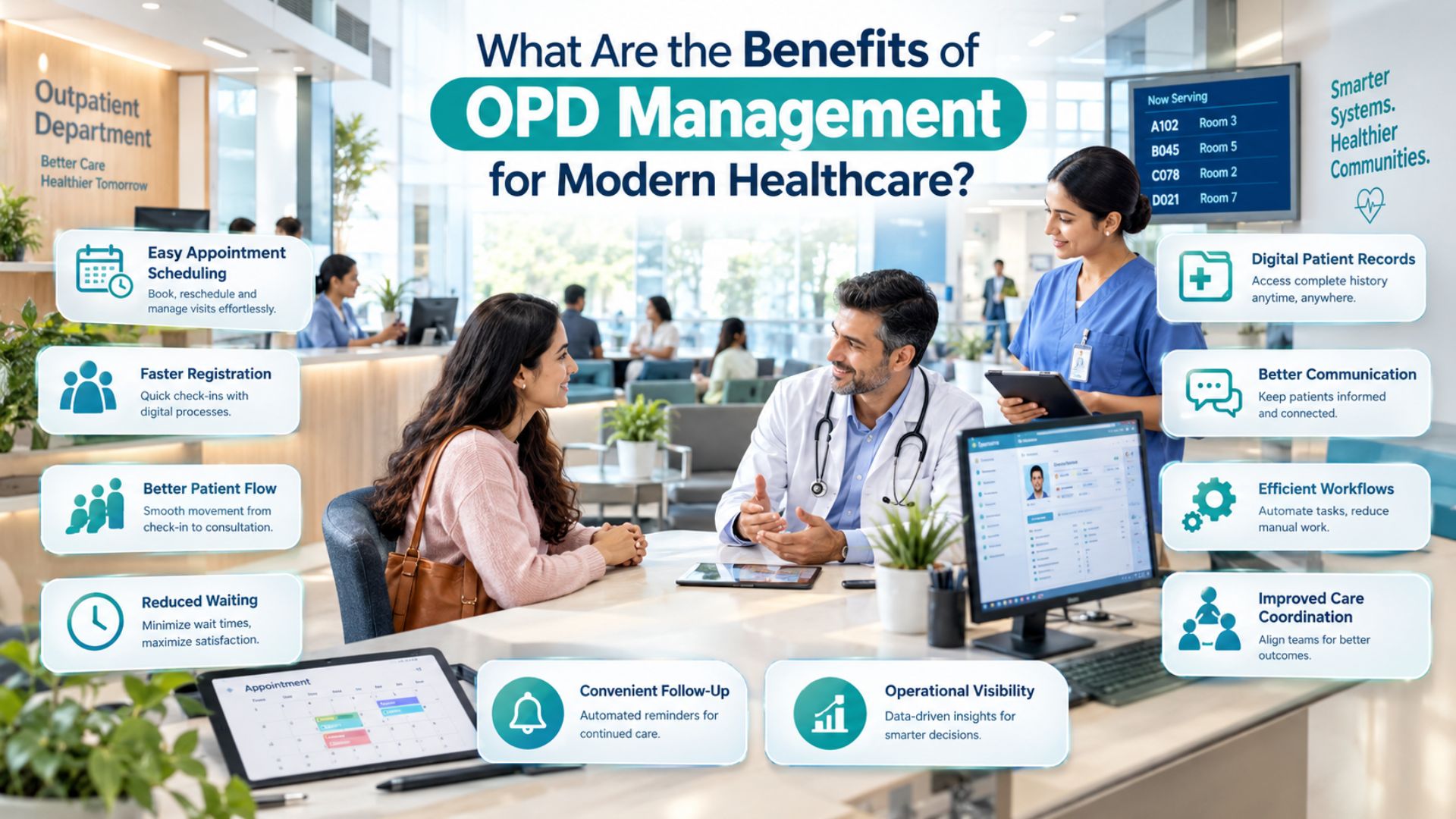
Outpatient departments handle a large number of patients every day, making efficient organization essential for modern healthcare facilities. OPD management helps healthcare organizations coordinate appointments, registration, consultations, patient records, billing, communication, and follow-up activities through structured workflows and digital tools.
An effective OPD management approach can make healthcare operations more organized while creating a smoother experience for both patients and healthcare professionals. By connecting different administrative and clinical processes, healthcare facilities can improve patient flow, reduce unnecessary delays, and support more efficient outpatient care.
What Is OPD Management?
***[OPD management](https://medcore.software/blog/opd-management/)*** refers to the processes and systems used to organize and manage outpatient department activities. It can cover everything from appointment booking and patient registration to consultation, diagnostic services, billing, and follow-up.
Modern OPD systems may use digital platforms to bring these activities together. Instead of relying on disconnected manual processes, healthcare teams can manage important information and workflows through centralized systems.
What Are the Benefits of OPD Management?
The key benefits include better patient flow, easier appointment management, improved access to patient information, smoother communication, reduced administrative workload, and more organized healthcare operations.
When outpatient workflows are properly coordinated, healthcare providers can spend less time handling repetitive administrative tasks and more time focusing on patient interactions and clinical responsibilities.
How Does OPD Management Improve Patient Flow?
Patient flow is an important part of outpatient operations. Delays at registration, consultation, billing, or diagnostic departments can affect the overall patient experience.
A well-organized OPD workflow can connect these different stages and provide healthcare teams with better visibility into patient movement. Appointment scheduling, digital registration, queue management, and coordinated departmental workflows can help facilities manage patient traffic more efficiently.
How Can OPD Management Reduce Waiting Time?
Long waiting periods can create frustration for patients and place additional pressure on healthcare staff. Digital scheduling and queue management can help organizations organize appointments and manage patient volume more effectively.
Automated appointment confirmations and reminders can also help patients arrive at the appropriate time and keep healthcare teams informed about scheduled visits.
While technology cannot eliminate every source of delay, better coordination can help healthcare organizations identify workflow bottlenecks and improve how outpatient services are organized.
How Does OPD Management Improve Appointment Scheduling?
Appointment management becomes easier when healthcare teams can manage schedules through a centralized system. Staff can organize provider availability, appointment slots, rescheduling, cancellations, and patient notifications from one platform.
Patients may also benefit from online appointment booking and digital confirmations, giving them greater convenience when managing their healthcare visits.
How Does OPD Management Support Patient Records?
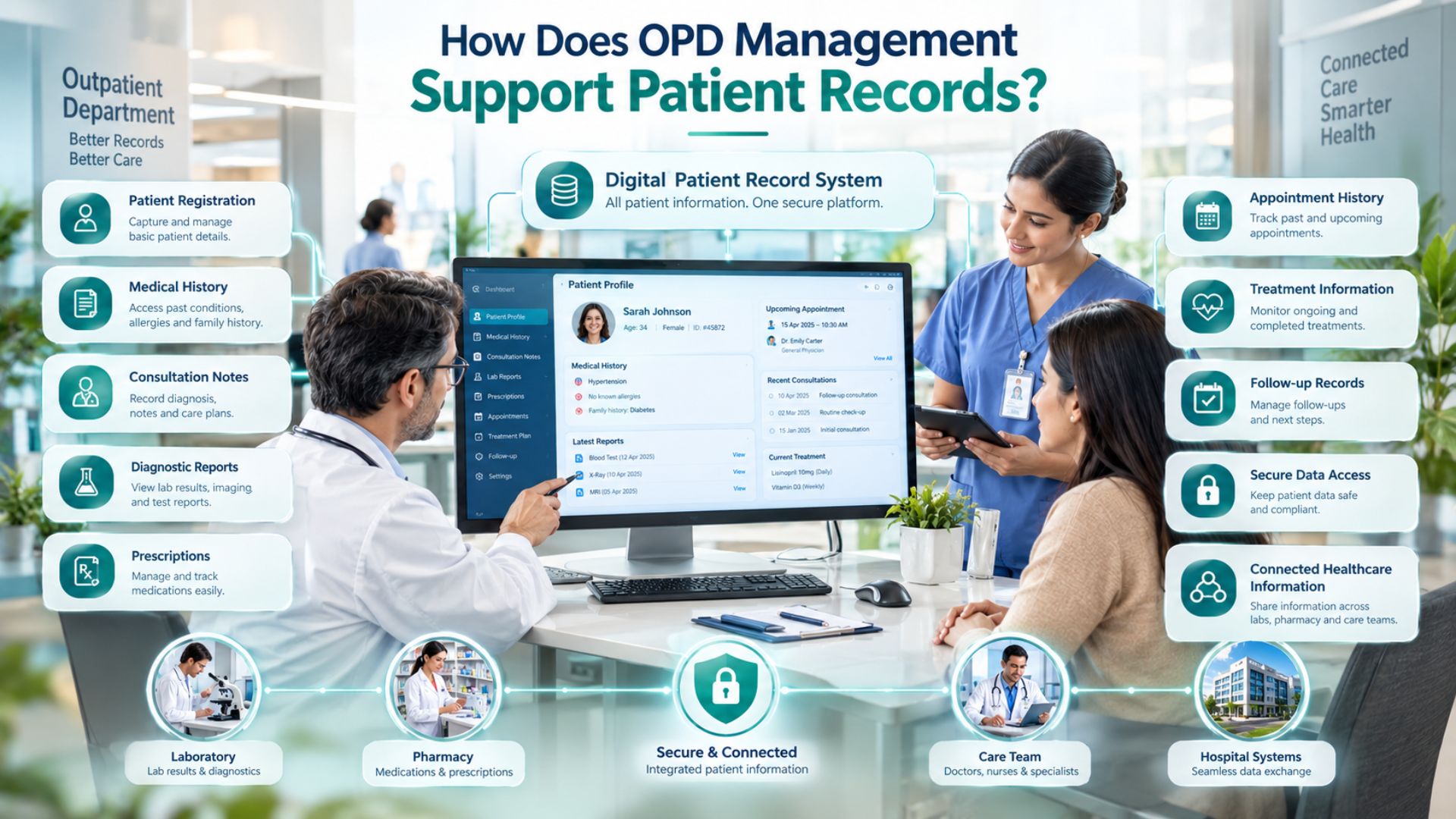
Accurate patient information is essential for coordinated healthcare. Digital OPD systems can help organize patient registration details, consultation notes, diagnostic information, prescriptions, and other relevant records.
When authorized healthcare professionals can access appropriate information through connected systems, they can spend less time searching through paperwork and more time reviewing information relevant to the patient's visit.
Can OPD Management Improve Communication?
Communication is an important part of the outpatient experience. OPD management systems can support communication between patients, doctors, nurses, reception teams, laboratories, billing departments, and other healthcare staff.
Automated reminders, appointment notifications, digital instructions, and secure communication channels can help keep patients informed throughout their visit and follow-up process.
How Does OPD Management Help Healthcare Providers?
Healthcare professionals often manage multiple responsibilities simultaneously. An organized OPD system can simplify administrative processes by providing tools for appointment management, patient information, consultation workflows, reporting, and follow-up.
Managers can also gain greater visibility into operational activity, helping them understand appointment volumes, workflow patterns, resource requirements, and areas that may need improvement.
How Does OPD Management Support Better Patient Experience?
A smooth outpatient journey begins before the patient enters the consultation room. Easy scheduling, simpler registration, organized queues, accessible information, clear communication, and convenient follow-up can all contribute to a more streamlined experience.
Patient-centered OPD workflows can also make it easier for healthcare organizations to identify areas where patients experience unnecessary complexity and improve those processes over time.
What Role Does Technology Play in OPD Management?
Technology can connect different parts of outpatient operations. Depending on the healthcare organization's requirements, an OPD management platform may include appointment scheduling, digital registration, queue management, electronic records, billing integration, notifications, reporting, and communication tools.
Integration with other healthcare systems can further reduce information silos and help different departments work with more consistent information.
What Should Healthcare Organizations Consider?
When implementing an OPD management solution, healthcare organizations should consider usability, data security, system integration, scalability, staff training, patient accessibility, and workflow requirements.
The goal should not simply be to digitize existing processes. Organizations should evaluate their current workflows and identify where technology can genuinely simplify operations, improve coordination, and support better patient experiences.
What Is the Future of OPD Management?
The future of outpatient management is likely to involve increasingly connected digital workflows. Online scheduling, electronic health records, automated communication, analytics, patient portals, and other digital healthcare technologies can help organizations create more coordinated outpatient services.
As patient expectations and healthcare demands continue to evolve, efficient OPD workflows can help healthcare organizations balance operational requirements with convenient, patient-focused care.
You can also watch: ***[Everyone is working, but the system is not connected](https://youtube.com/shorts/Ul_7E1sMpuI?si=OKm8Co1e-aeUwiJ3)***.
Summary
***[OPD management](https://medcore.software/blog/opd-management/)*** is an important part of modern healthcare operations. It can help organizations improve appointment scheduling, patient flow, communication, record management, workflow coordination, and administrative efficiency. By combining well-designed processes with appropriate digital technology, healthcare facilities can create more organized outpatient operations while supporting a smoother patient experience.
FAQs
What is OPD management?
OPD management is the process of organizing outpatient department activities such as appointments, registration, consultations, patient records, billing, communication, and follow-up.
Why is OPD management important?
It helps healthcare organizations coordinate outpatient workflows, manage patient volume, improve operational visibility, and create a more organized patient journey.
How does OPD management reduce waiting time?
Scheduling, queue management, digital registration, and better coordination between departments can help identify and reduce avoidable workflow delays.